
Our goal is to work from a systems theoretical approach, helping individuals, couples, and families identify and understand the underlying causes of emotional problems, and develop a plan to improve their mental health and relationships.
Types of Therapy
Medication Management

Medication Management
Medication Management
At Central Iowa Family Institute, we implement a collaborative approach to medication management, emphasizing that mental health care is paramount and that managing psychiatric medications is a vital part of a long term treatment plan. Our approach to medical treatments includes guiding our clients through the complexities of psychiatric medications, empowering them to take charge of their mental well-being by providing the most effective medication regimen tailored to their specific needs. This process involves rigorous assessment, monitoring, and adjustment of medications to achieve optimal therapeutic outcomes. What distinguishes us is our unwavering commitment to integrative mental health care, recognizing that, while medications are pivotal, optimizing overall well-being requires incorporating various modalities, such as counseling, chiropractic services, functional medicine, nutrition/wellness, and lifestyle changes.
Recommended schedule: TBD by provider; varies based on individual needs

Ketamine Assisted Psychotherapy
Ketamine Assisted Psychotherapy
Ketamine Assisted Psychotherapy (KAP) is an innovative approach to mental health care that pairs low-dose ketamine, prescribed and monitored by medical professionals, with supportive psychotherapy. It is often a fit for adults experiencing treatment-resistant depression, major depression, anxiety, or trauma-related conditions such as PTSD, especially when traditional treatments have not brought the relief they need. Care begins with an initial consultation to determine whether KAP is a safe and appropriate fit, with medical evaluation and prescription provided through our established network of qualified prescribers. Treatment then moves through preparation sessions, supported in-office medicine sessions using a dissolving sublingual tablet or nasal spray, and integration sessions that help turn insight into lasting change. At Central Iowa Family Institute, KAP is provided by Becky Schwanz, tLMHC, a trained Ketamine Assisted Psychotherapist, and is coordinated with counseling, medication management, and psychological testing for comprehensive care.

Psychological Testing
Psychological Testing
Psychological testing services assess cognitive, emotional, and behavioral functioning to identify concerns and develop tailored treatment plans. This process can help clarify diagnoses, guide interventions, and provide insight into areas like attention, memory, and mood.
WE ARE CURRENTLY NOT ACCEPTING ANY NEW APPLICATIONS FOR TESTING UNTIL FURTHER NOTICE.
Recommended schedule: TBD by provider; varies based on individual needs
Individual Therapy

EMDR Treatment
EMDR Treatment
Eye Movement Desensitization and Reprocessing (EMDR) treatment helps you heal from the symptoms and emotional distress of disturbing life experiences. Using the detailed protocols and procedures learned in EMDR training sessions, therapists help you activate your natural healing processes. The net effect is feeling empowered by the very experiences that once distressed you.

Individual Counseling
Individual Counseling
Involves discussing your feelings, thoughts and behaviors with a mental health professional. Counseling can help you learn healthy coping strategies for managing your life and responding to difficult situations in a constructive way. Various psychotherapy approaches exist, each tailored to specific needs. Your therapist will identify which approach is best for you, depending on your unique circumstances.
Recommended schedule: TBD by provider

Individual Trauma Counseling
Individual Trauma Counseling
Engaging in trauma counseling entails a compassionate exploration of your
emotions, thoughts, and behaviors under the guidance of a skilled mental health
professional. Through this therapeutic process, you can acquire evidence based insights
into the impact of trauma on your well-being. Trauma-focused counseling aims to
facilitate the development of adaptive coping mechanisms, empowering you to
navigate life’s challenges in a constructive manner and treat mental illness.
Recommended schedule: TBD by provider
Couples Therapy

Marriage Counseling
Marriage Counseling
With the help of trained professionals couples determine whether to renew the relationship or pursue separate paths. Your therapist can help you foster open communication, solve challenges together, discuss differences, and examine both positive and negative aspects of the relationship. While traditional marriage counseling often involves joint therapy sessions for couples, there are instances where one partner opts for individual therapy.
Recommended schedule: TBD by provider

Discernment Counseling
Discernment Counseling
Is intended to help couples consider options before deciding to divorce. You’ll foster a deeper understanding of each other’s role in the relationship and achieve clarity regarding the future you want for yourself. There are three potential outcomes: choosing to stay married, moving towards divorce, or opting for six months of marriage counseling to explore restoring the marriage.
Recommended schedule: 1 initial session with the parties together, up to 5 subsequent sessions with the parties together if you so choose

Conciliation Counseling
Conciliation Counseling
Is for couples who are in the process of or considering divorce, with the main objective being to help each party make a well-informed and deliberate decision about the relationship. Advantages include better communication between parties, conflict resolution and potential alternatives to divorce. If marital conciliation proves unsuccessful, conciliation counseling can offer a sense of closure for each party.
Recommended schedule: 1 initial individual session with each party, 3 subsequent sessions with the parties together
Family Therapy

Child Therapy
Child Therapy
Is designed to address the unique psychological and developmental needs of children. Our therapists use specific techniques to teach kids how to manage their thoughts, emotions and behaviors so they can succeed socially and academically. Children have the opportunity to practice their new skills during sessions so they can implement them in their daily lives.
Recommended schedule: TBD by provider

Play Therapy
Play Therapy
Focuses on cognitive, behavioral and emotional challenges brought about by divorce, death, relocation, hospitalization, chronic illness, physical and sexual abuse and domestic violence. Play therapy can help kids cultivate empathy and respect for themselves and others, develop new social skills, experience and express emotion, learn to problem solve and more.
Recommended schedule: TBD by provider

Co-parent Counseling
Co-parent Counseling
Is for divorced or separated parents experiencing frustration, anger and grief. Parental conflict can have a negative impact on children. Co-parent counseling is a great way to help you approach decision-making and problem-solving, handle differences in child-rearing philosophies and practices, and develop discipline and rules for the kids. It involves both parents and possibly current partners or children.
Recommended schedule: TBD by provider

Family Counseling
Family Counseling
Involves gathering multiple family members for therapy sessions to address problems and communicate thoughts and emotions effectively. Exploration may extend to understanding family roles, coping skills, rules and behavioral patterns, as well as pinpointing underlying causes of conflict. This approach helps recognize strengths such as mutual care, and weaknesses such as trust issues, and will help you develop strategies for resolution.
Recommended schedule: TBD by provider; generally less than 6 months
STEPPS
Systems Training for Emotional Predictability and Problem Solving
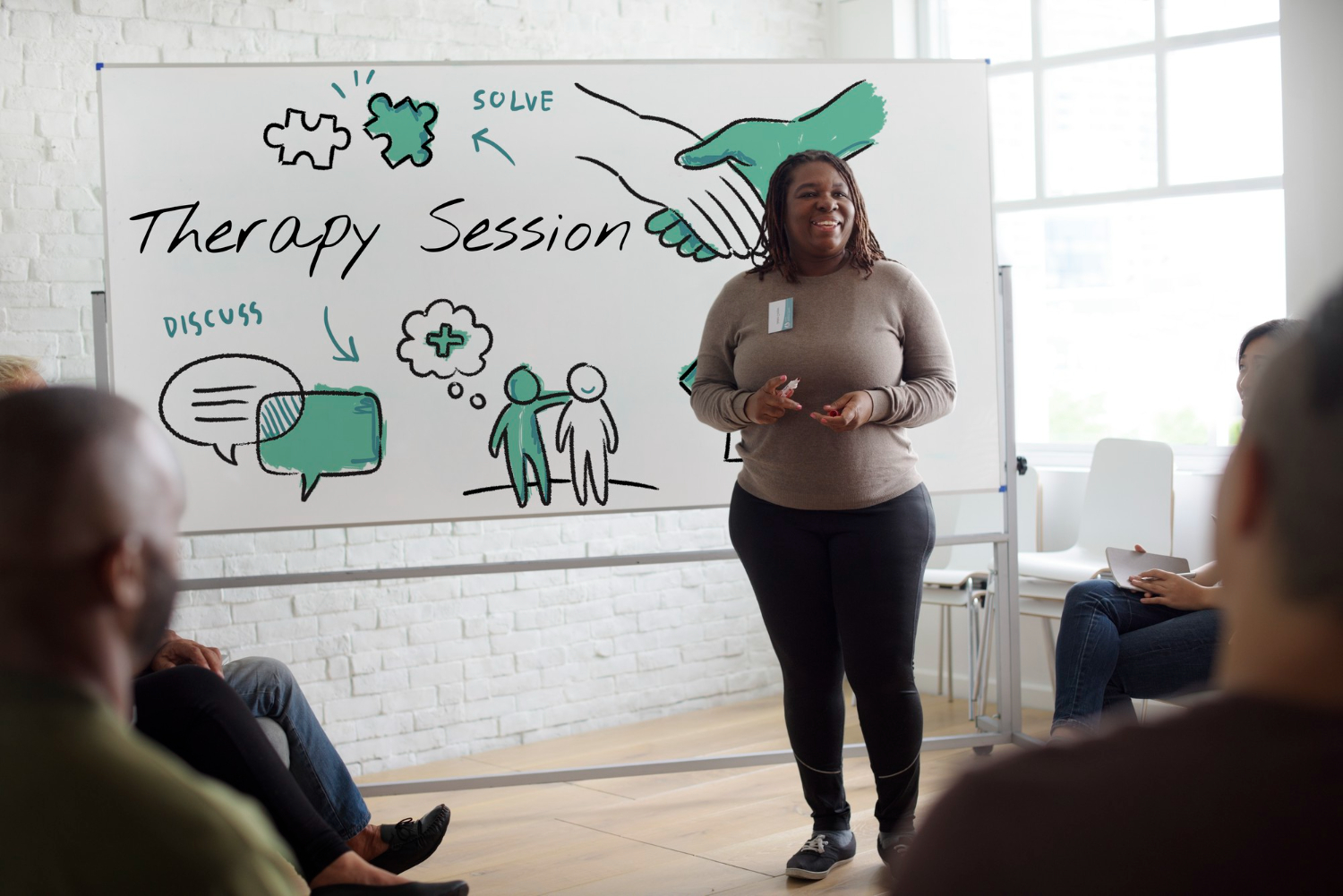
Systems Training for Emotional Predictability and Problem Solving (STEPPS) is a 20-week group therapy program for individuals with borderline personality disorder (BPD) or difficulties with emotional intensity. In this group, members will learn about emotional intensity, as well as a variety of emotion management and behavioral skills to manage difficulties associated with disorders of emotional intensity, such as sudden changes in emotions, impulsiveness, and trouble communicating.
Sessions will occur twice weekly (Mondays and Tuesdays from 1:00 pm to 2:00 pm) for 20 weeks. Group members must be seeing an individual therapist on a regular basis. As this is a full 20-week group, interested individuals must commit to attending all 20 weeks (40 sessions) of the group.
Because of the educational nature of the group, starting in the middle of a* group is not possible. This group will be cofacilitated by Robert Doss, Ph.D. (Licensed Psychologist), and Kirstin Franklin, M.S. (Provisionally Licensed Psychologist).
Schedule: twice weekly (Mondays and Tuesdays from 1:00 pm to 2:00 pm) for 20 weeks